
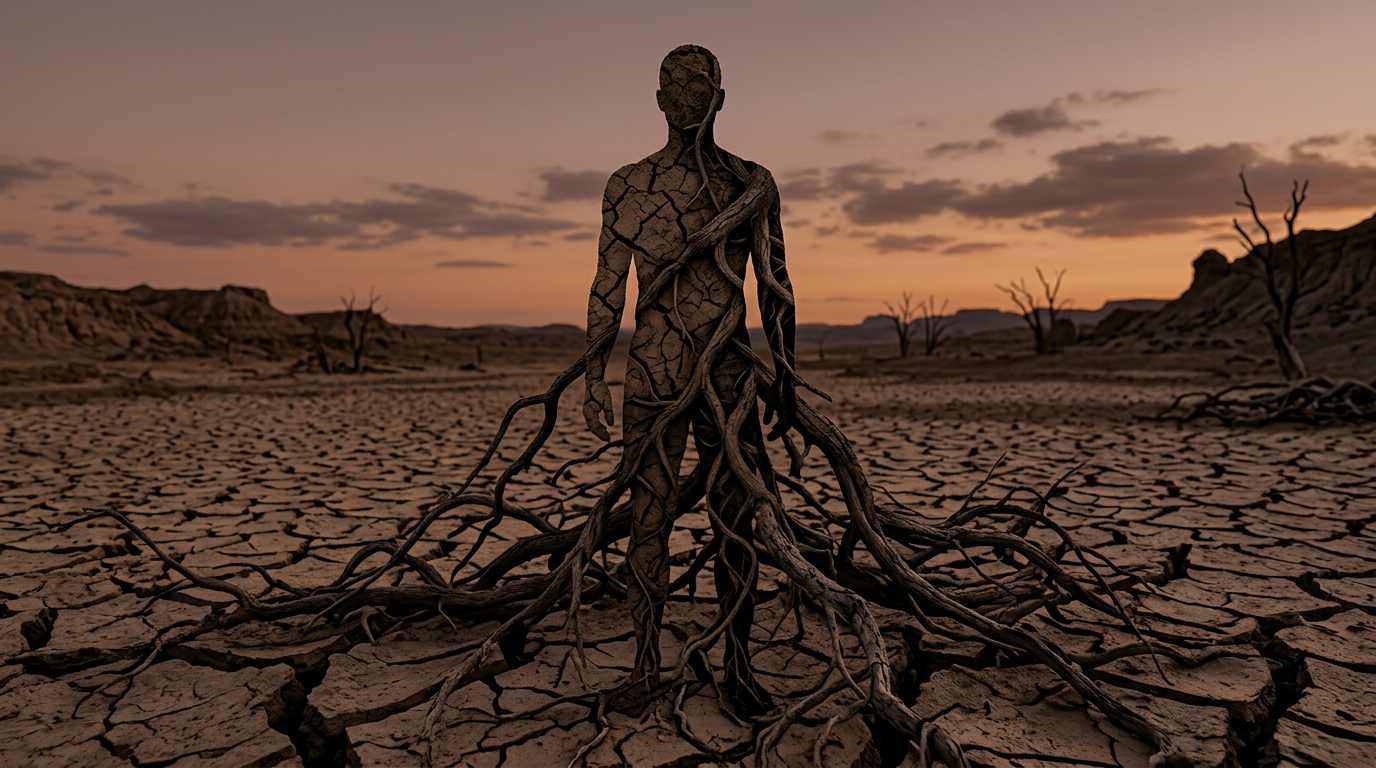


Navigating Trauma and Health: A Resourceful Approach
Explore the intersection of trauma and health with Celestia Quixs as we uncover systemic failures in chronic illness management.
This podcast discusses the post by Celestia Quixs which explores the intersection of trauma and health, detailing experiences with genetic illness and systemic neglect. It critiques mainstream wellness narratives, emphasizing a need for a resourceful approach to chronic illness management. The piece highlights institutional failures and the importance of creative outlets in coping.
- The piece deliberately reframes chronic illness + trauma as a single forensic record rather than separate personal narratives: genetic disease (SPINK1 HCP from age 6, progressive CFTR-related respiratory damage culminating in oxygen-dependent pulmonary fibrosis/bronchiectasis) is synchronized with lifelong relational and institutional neglect, culminating in the 2019 Aloha murder-suicide and subsequent cascading abandonment. Symptoms are positioned as time-stamped evidence with an explicit October 2026 prognosis clock, not as material for inspirational recovery arcs.
- Institutional critique is precise and infrastructure-level: the September 2025 Care Everywhere synchronization under the 21st Century Cures Act is identified as the mechanism that nationally broadcast retaliatory blacklisting tags, rendering premium Medicare coverage (Original + Plan G + Part D) functionally inert because the blockade sits at the provider layer. Federal agencies (HHS OIG, CMS, Medicare Ombudsman) are shown to lack compulsion power over physicians, converting systemic failure into a documented operational reality rather than an abstract grievance.
- The operative distinction between “resourceful” and “resilient” is the structural core: resilience is rejected because permanent scarring (pancreatic ducts, lungs, fluoroquinolone mitochondrial damage) precludes any return to baseline. In its place the post details a self-contained palliative protocol inside a 160 sq ft space—SSDI-financed oxygen, cross-referenced OTC supports, rotational antifungals with liver safeguards, and creative production as nervous-system containment—while noting the same genetic flag has already migrated to two grandchildren via pediatric-to-adult EHR interoperability.
Pip: Celestia Quixs has a site, and if you were expecting wellness content with a side of inspirational quotes, buckle up.
Mara: This episode covers the territory that Celestia Quixs maps in “The Impact of Trauma on Health” — a post that moves through genetic illness, childhood medical neglect, systemic healthcare failures, and what it actually looks like to manage complex conditions when the institutions designed to help have closed every door.
Pip: The word the AI used was “resilient.” The word that got kept was “resourceful.” That distinction is the whole episode.
Mara: Let’s start with what the post is actually doing, and why that word swap matters so much.
When the Body Keeps the Score and the System Keeps the Door Shut
Pip: This post is doing something specific and deliberate — it’s building a case that physical illness and relational trauma are not separate stories. The question it’s answering is: what happens to a body that carries both genetic disease and lifelong systemic neglect, with no institutional support to absorb either?
Mara: The post frames this directly. It describes what it calls “Forensic Synchronization of Biological and Relational Trauma” — the aim being to, quote, “mathematically and biochemically validate physical symptoms as an airtight record of pure structural survival running straight toward the October 2026 prognosis clock.”
Pip: So the upshot is: this isn’t a personal essay in the confessional mode. It’s a forensic document. The symptoms are evidence, and the evidence has a deadline.
Mara: The genetic picture here is pediatric in onset. Spink1 Hereditary Chronic Pancreatitis with flares beginning at age six, dismissed by a parent as growing pains. A suspected CFTR-Related Disorder with respiratory symptoms tracking from that same year — recurrent upper respiratory infections, then bronchitis in her twenties, then recurrent pneumonia in her fifties, now oxygen-dependent Pulmonary Fibrosis and Bronchiectasis.
Pip: Fifty years from first flare to confirmed ductal scarring on imaging. The system called it idiopathic in 1996. It took descendants testing positive for Spink1 in 2017 to force the genetic acceptance.
Mara: And the post connects those decades explicitly to the January 2019 Aloha tragedy — a family murder-suicide — and the cascading abandonment across every support domain that followed. The argument is that stress-induced immune compromise, layered onto an already immunocompromised genetic baseline, is what accelerated everything.
Pip: Which is van der Kolk’s point, and the post is careful to say so. When an AI-generated summary dropped the word “somatization” into her peer support opener, the response was immediate and precise: that’s not what “the body keeps the score” means. The physical symptoms are documented, organic, and severe.
Mara: The post also covers what it calls the national infrastructure blockade — specifically, how the September 2025 Care Everywhere synchronization under the 21st Century Cures Act Interoperability Mandates broadcast retaliatory blacklisting tags across competing EHR networks nationwide. The consequence, as the post puts it and as confirmed by recorded calls with HHS OIG, CMS, and the Medicare Ombudsman, is that federal agencies cannot compel a physician to treat a patient.
Pip: So premium insurance — Original Medicare, Plan G, Part D — is functionally worthless when the blockade lives at the provider layer, not the payer layer.
Mara: Which brings the post to what it calls “radical resourcefulness”: a self-palliative intensive care protocol built inside a 160-square-foot space. An oxygen concentrator purchased on installment through SSDI. OTC vitamins, minerals, and supplements cross-referenced on Drugs.com. A rotational antifungal protocol — huff coughing, Himalayan pink salt inhaler, thyme essential oil, ivermectin on a strict four-day minimum cycle to protect liver function. Music, drawing, painting, and writing as distress tolerance.
Pip: The post also addresses the word “resilient” directly — and rejects it. Resilient implies a return to baseline. There is no baseline. Lungs are permanently scarred. Pancreatic ductal scarring is irreversible. Mitochondrial damage from fluoroquinolone toxicity does not undo itself.
Mara: The post also takes on the credentialing problem — licensed counselors on LinkedIn pushing “mindset” frameworks against a genetic mutation and cellular-level antibiotic injury. The response was to stop logging in and route essays automatically through WordPress, so the work keeps reaching those feeds without costing any energy engaging with the replies.
Pip: Automated distribution as operational security. That’s a sentence that belongs in this post.
Mara: The post also documents a multi-generational dimension: two of her grandchildren carry the Spink1 mutation. When her daughter brought a Minnesota Children’s Hospital specialist — one who had focused on pediatric pancreatitis since 1979 — to consult with a Doernbecher GI physician and confirmed the daughter’s clinical read was correct, the Doernbecher physician responded by banning the children from the facility. The post warns that pediatric flags don’t seal at eighteen; they migrate into adult EHR networks through the same interoperability architecture.
Pip: The post ends where it began: not with recovery, not with resilience, but with a daily defensive operation against active biological tissue failure — conducted entirely outside the institutional grid, by someone who knows exactly how these systems are supposed to work.
Mara: What stays with me is the precision of it — the distinction between chronic crisis and acute crisis, between resourcefulness and resilience, between a system that can’t compel care and one that actively routes around the patient.
Pip: And the creative work sitting at the center of all of it. Music and writing as the thing that keeps the nervous system from tipping over while everything else is on fire.
Mara: That tension — between meticulous documentation and the need for something that isn’t documentation — seems like territory worth returning to.
Related Essay:
The Impact of Trauma on Health
Discover more from Celestia Quixs™
Subscribe to get the latest posts sent to your email.