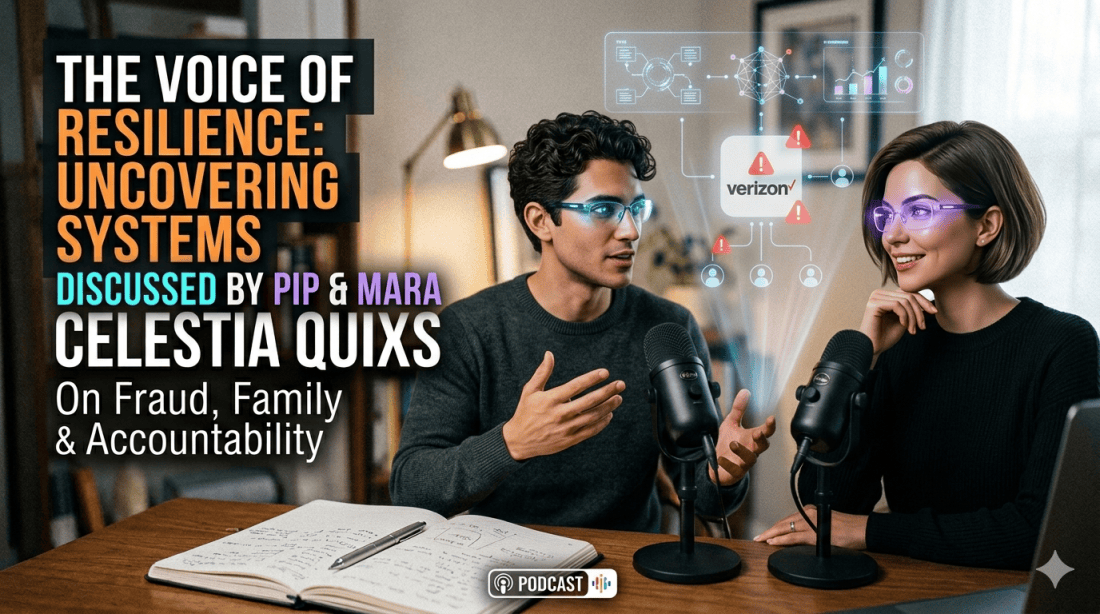
The episode features Celestia Quixs tackling issues with Verizon's flawed fraud system and family scapegoating, highlighting systemic failures in both contexts. Notably, she faced significant hurdles in reporting misconduct while uncovering deep-rooted family trauma affecting her mental health. The narrative emphasizes the need for accountability in oppressive systems and personal resilience.
Tag: Family Scapegoating
CQ DX Podcast Episode 5: Health Systems And Human Denial
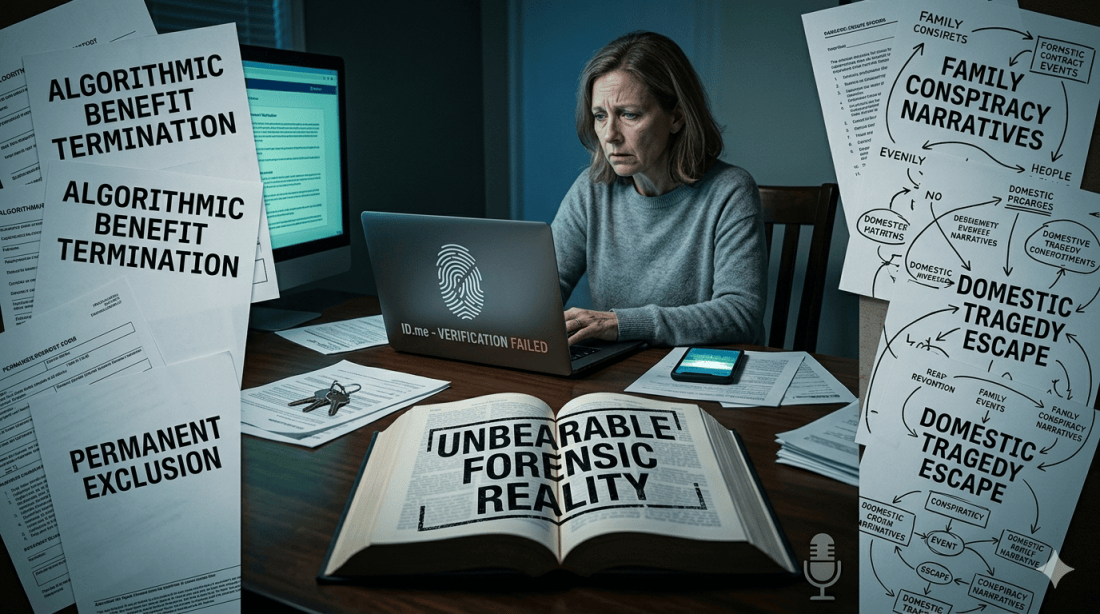
Episode 5 explores how healthcare and identity verification systems function as mechanisms for permanent exclusion, from ID.me failures to algorithmic benefit termination. It also dismantles the elaborate conspiracy narratives families construct to escape the unbearable forensic reality of domestic tragedy.
The Push/Pull Was Never Mine
The push/pull in my relationships wasn't my BPD—it was external narcissistic family abuse and enabler complicity. Naming the pattern ends self-blame. For scapegoats and truth-tellers who can't forget: your intensity is proportional, not pathological.
Between the Sacred Silence and Sleep
Between Sacred Silence and Sleep, I navigate a world where personal struggle meets systemic indifference. My life has been shaped by decades of complex challenges—chronic illness, familial betrayal, and institutional obstacles. Yet in the quietest moments, insights emerge: patterns of survival, the alchemy of turning pain into art, and the clarity that comes from witnessing the invisible forces shaping one’s reality. This space is where reflection becomes creation, and where endurance transforms into expression.
The Unseen Burden of Remembering: Beyond Marilu Henner’s Blessing
Highly Superior Autobiographical Memory (HSAM), often seen as a gift, can be a curse for those with traumatic histories. While media portrayals celebrate its positive aspects, many individuals experience relentless suffering as painful memories remain vivid and inescapable. A more nuanced understanding is essential to acknowledge its profound emotional toll on those affected.
From Family to Society
Imagine, if you will, a family dynamic where roles are rigidly assigned - where one child becomes the designated scapegoat, carrying the projected shadows of an entire system. Now, imagine this family dynamic rippling outward to extended family and downward through the next two generations. Imagine this dynamic extending into community—friends, schools, religious groups, workplace, intimate relationships; into medical and mental health services; into city, county, state, and federal agencies—all reflecting and reinforcing the original pattern. Imagine the scapegoat is a late-in-life diagnosed high-empathy autistic, highly intelligent, highly functional, self-responsible, resilient problem-solver who endured decades of misdiagnoses before finally receiving recognition of their actual conditions. If you can imagine all of this, you have just put yourself into my shoes.
The Neurobiology of Compulsive Behaviors
The content explores the complexities of hypersexuality and compulsive behaviors stemming from trauma. It highlights trauma's neurobiological impact, the issues of misdiagnosis, and the need for trauma-informed care. Emphasizing understanding over stigma, the text advocates addressing underlying trauma to facilitate healing and acknowledges these behaviors as adaptive rather than flawed.
End of Life for a Model Codependent People-pleaser
A former people-pleaser re-examines their identity and past relationships, coming to terms with the emotional cost of self-betrayal and family dysfunction.
Thank Them
The content explores Complex Post Traumatic Stress Disorder through a spiritual lens, emphasizing the importance of recognizing abuse and toxicity in relationships. It encourages individuals to thank their abusers for motivating them to leave harmful environments. Ultimately, it advocates for seeking freedom, love, and peace outside of toxic dynamics, promoting personal growth and connection with like-minded individuals.


You must be logged in to post a comment.