When you are terminally ill, fighting to breathe shouldn't require a battle. This essay documents the intersecting patterns of corporate gaslighting, SSDI payee exploitation, and family medical neglect. A raw account of choosing objective reality over comfortable delusions when the system fails.
Category: Psychology & Behavior
Dismantling the Delusion
When tragic domestic outcomes are met with intense parental denial, families often construct elaborate conspiracy theories to avoid agonizing reality. The Mackensie Shirilla case brought my own experience with family delusion to mind. This essay explores how trauma-induced cognitive dissonance fuels these damaging myths.
The Penultimate Narcissist
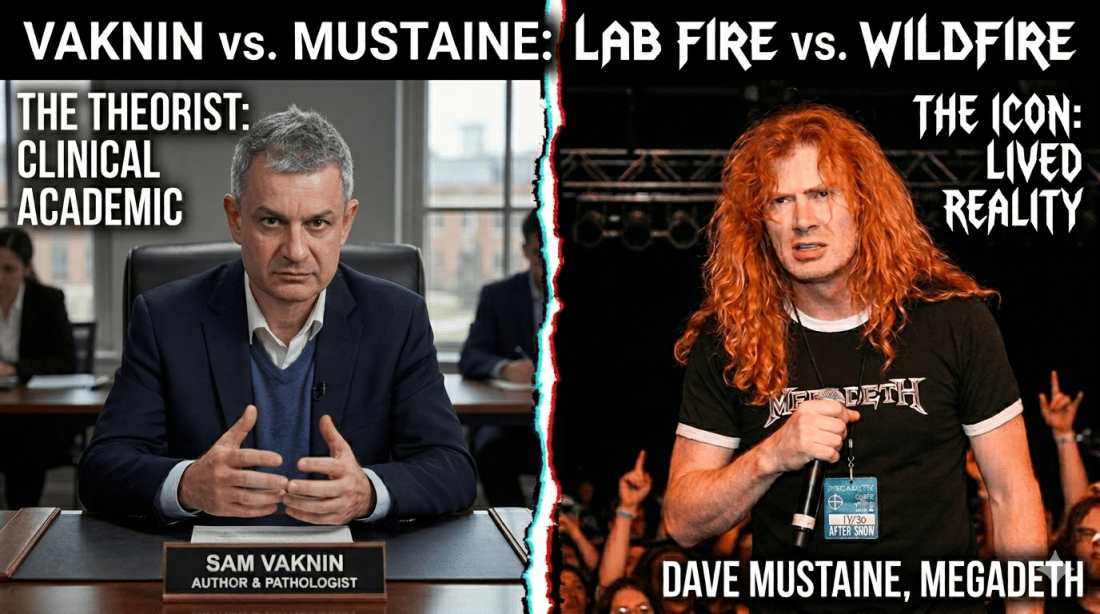
Vaknin analyzes narcissism in a lab; Mustaine fuels the fire in the real world. From "Sister of Sorts" to administrative erasure, this essay documents the objective transition from idealization to discard, backed by the immutable receipts of a witness who, due to Hyperthymesia, is biologically incapable of forgetting.
The Expert-to-Abuser Pipeline
When trauma “experts” receive a survivor’s documentation and respond with public pathologization, it reveals the expert-to-abuser pipeline. This timeline of professional retaliation by Rebecca C. Mandeville and Sam Vaknin shows how credentials can weaponize plausible deniability against the very people they claim to help.
The Steel Cold Gaze
A mother’s “steel cold gaze” in defense of her child exposes deep family betrayal. What happens when protecting your children makes you the villain? This raw essay explores forensic clarity, grooming language, and the unbreakable barricade forged from refusing to look away.
Why ‘Have You Tried…?’ Is a Condescending Question
The author expresses frustration with the question, "Have you tried…?" feeling it implies incompetence and is condescending. Instead of asking this, they suggest validating the person's experience and offering support. Questions should reflect competence and motivation, focusing on what the individual plans to do next rather than the questioner's comfort.
The Push/Pull Was Never Mine
The push/pull in my relationships wasn't my BPD—it was external narcissistic family abuse and enabler complicity. Naming the pattern ends self-blame. For scapegoats and truth-tellers who can't forget: your intensity is proportional, not pathological.
The Cost of Being the One Who Knows
After decades of sacrificing for her family, a dying woman fixes a life-or-death insurance crisis alone while her daughter refuses one phone call and sends condescending links. A raw memoir of the scapegoat who keeps surviving the family that never shows up.
You Don’t Need Pain to Know Joy
The idea that “you need pain to know joy” is not wisdom—it’s abuser logic. Babies feel pure joy without any prior suffering. This essay dismantles the lie that cruelty is required for happiness.
Identifying Coercive Control
The post highlights patterns of behavior indicative of coercive control exhibited by a man named John, particularly in his professional driving role and personal interactions. It details incidents illustrating his boundary confusion, entitlement, and narcissistic tendencies. The author emphasizes the need for self-preservation amid John's retaliatory attempts, while acknowledging systemic failures to recognize this abuse.
NARCISSISTIC ABUSE IN REAL-TIME
The exchange reveals a tense situation between the narrator and John, characterized by boundary violations and emotional turmoil. After John opens a package without permission, the narrator reacts with anger and sharp humor, illustrating a struggle for independence. Despite feeling overwhelmed, they assert their boundaries, aiming for peace and reclaiming control in their chaotic environment.
Cosmic Irony and the Cruel Joke of Kindness
The concept of "cosmic irony" illustrates how fate often mocks human desires. Over six years, the author experienced betrayal from the medical system, friends, and family. Despite a philosophy of selflessness, their kindness was exploited. Attempts at connection were met with rejection, amplifying feelings of abandonment and reinforcing a painful reality that peace is unattainable.
When Seeking Trauma Processing Through AI Becomes a Risk
After experiencing severe trauma and rejection from healthcare, the author turned to AI for support in processing their complex PTSD. However, issues like automated crisis alerts and data privacy concerns threaten their well-being. They advocate for better protections to ensure AI can be a beneficial tool rather than a source of further harm.
AI Doesn’t Cause Psychosis — It Mirrors What’s Already There
Headlines blame AI for psychosis, but research shows preexisting vulnerabilities are the real factor. Dark humor, RPG AI tests, and Jacob’s Ladder scenarios show the difference between delusion and metaphorical coping.
The Hamburger Email
The case study illustrates psychological manipulation through deliberate delay and trivial communication. An abuser used an irrelevant message about hamburger prices to provoke stress and redirect emotional energy, demonstrating control tactics like withholding information and script-flipping. Recognizing such patterns is crucial for protecting oneself from emotional abuse.
Healing from Narcissistic Family Dynamics
The author reflects on personal experiences as a codependent individual from a narcissistic family, emphasizing that recognizing narcissistic traits in oneself and others is essential for healing. They stress the importance of individual therapy before entering relationships, advocating for self-love and mutual respect. Familiarity with past trauma can lead to unhealthy patterns; thus, addressing one's own issues is crucial.
A desperate cry for help: chronic illness, abuse, and mental health trauma
WILL SOMEONE, PLEASE, FUCKING HELP ME?! My issues are: ongoing family stalking, caregiver abuse, unprocessed trauma from murder/suicide, chronic illness, and medical and mental health provider gaslighting. I've tried everything.
Narcissistic Families not only Scapegoat, they ‘Cain and Able’
A raw look at why dysfunctional families need a scapegoat. It details the psychological abuse and manipulation used to silence a truth-teller. Understanding Narcissistic Families and the Scapegoat Role This essay explores the fixed role of the family scapegoat in narcissistic dynamics. It details the psychological tactics of abuse, from gaslighting to smear campaigns, and … Continue reading Narcissistic Families not only Scapegoat, they ‘Cain and Able’
A Narcissistic Mother Uses Her Children’s Love Against Them
The author reflects on childhood experiences with a manipulative mother, who fostered division among siblings while portraying herself as truthful. Grandma’s intervention led to forced confessions of misdeeds. Despite recognizing familial dysfunction and being the family's truth-teller, the author ultimately felt abandoned, revealing the deep emotional wounds caused by their mother's actions.
No one Will be at Your Funeral
The author reflects on their experience as the scapegoat in a narcissistic family, feeling unseen and unworthy. Inspired by a content creator's statements, they recognize the need for personal healing and self-improvement to attract meaningful relationships. The journey toward mental and physical health is emphasized as essential for a better future.
Trauma, Trust, & the Truth
A personal journey from happy innocence to painful awareness, exploring how betrayals of trust—from sexualization to emotional abuse—can redefine one's relationship with humanity
Regarding Suicide Prevention…
The text argues that suicide rates won't decrease until society acknowledges that suicide is caused by environmental factors rather than genetic ones. It emphasizes the need to focus on healing psychological trauma within families rather than treating individuals in isolation. Current support systems are inadequate, leading to rising suicide rates.
End of Life for a Model Codependent People-pleaser
A former people-pleaser re-examines their identity and past relationships, coming to terms with the emotional cost of self-betrayal and family dysfunction.


You must be logged in to post a comment.