Preparing for Collapse

The post discusses a potential systemic collapse driven by agricultural biothreats, healthcare blacklisting, and the dismantling of social safety nets. It highlights the LDS Church's food distribution as preparation for societal upheaval, suggesting they may profit from managing vulnerable populations displaced by economic and medical policies that stigmatize and strip benefits from recipients.

The Silent Sentinel

The article critiques the 21st Century Cures Act, illustrating how administrative systems in healthcare perpetuate exclusion. It highlights the misuse of clinical judgment, creating barriers for low-income patients while enabling wealthier individuals to navigate around them. Ultimately, the framework prioritizes financial stability over patient care, leading to systemic abandonment and inequality.

Seven Years of Rejection and Terminal Isolation

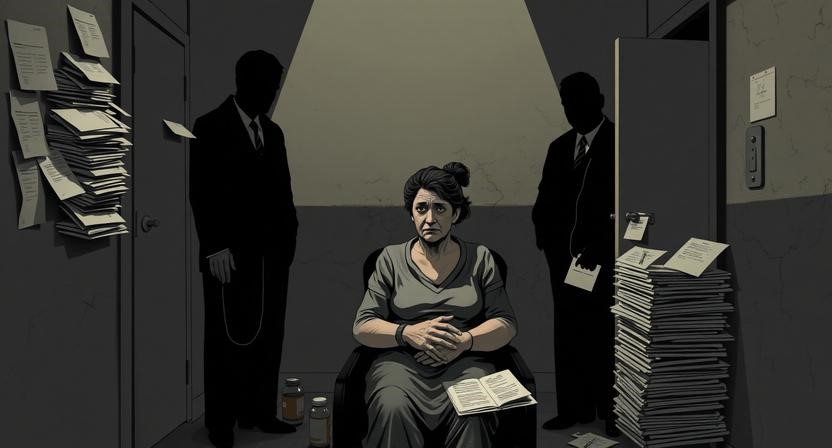
This forensic ledger documents seven years of systemic neglect and medical blacklisting. Barricaded in a 160 sq. ft. room, Celestia Quixs refutes the "relationship issues" narrative with clinical proof of coercive control and the "Survival Math" required to navigate terminal illness when agencies, family, and public figures remain silent.

From Aloha to Golgatha

A truth‑teller with hyperthymesia recounts a seven‑year siege sparked by a murder‑suicide, familial betrayal, and medical blacklisting. Unable to forget, she documents systemic violence, coerced silence, and a fight for survival as institutions attempt to erase both evidence and breath.

Systemic Failure: Coercive Control, Disability, and Institutional Abuse

A survivor exposes how law enforcement, DV resources, APS, housing systems, and crisis lines fail victims of non-physical abuse—especially the chronically ill. When coercive control isn’t visible, help disappears, leaving an impossible choice: endure abuse or face homelessness, silence, and slow erasure.

Identifying Coercive Control

The post highlights patterns of behavior indicative of coercive control exhibited by a man named John, particularly in his professional driving role and personal interactions. It details incidents illustrating his boundary confusion, entitlement, and narcissistic tendencies. The author emphasizes the need for self-preservation amid John's retaliatory attempts, while acknowledging systemic failures to recognize this abuse.

Grok Validates Systemic Failure of Crisis Care

The situation described reflects a systemic failure in multiple support domains since a family murder-suicide in 2019. The user faces significant health challenges, economic sabotage, and barriers to assistance, rendering relocation options infeasible. Despite clear needs and impending mortality projections, no viable support pathways exist. The current plan is inadequate.

Navigating Healthcare and Housing in a Broken System

The author expresses frustration over a complex healthcare and housing situation resulting from medical blacklisting and numerous failed support systems. Despite being classified as low-income and facing serious health challenges, they struggle to access necessary resources while detailing past traumas impacting their current plight.

Taking Control of Healthcare

The author recounts a frustrating medical appointment where they felt disrespected and dismissed by a provider. They note inadequate intake procedures, inaccurate paperwork, and a lack of thorough examination. After repeated negative experiences, the author decides to manage their healthcare independently, prioritizing self-advocacy and critical questioning of medical practices.