
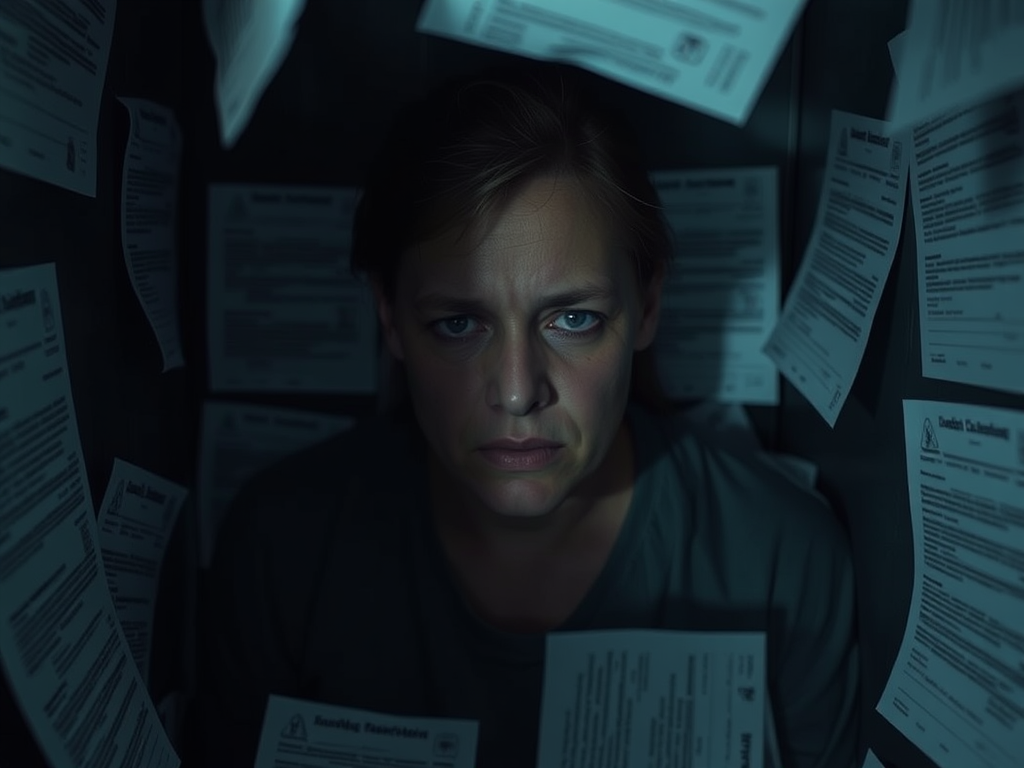


When Christian Support Networks Fail the Traumatized
A survivor’s account reveals the empty referral chain in Christian support networks, showing how individuals with complex trauma are repeatedly passed along without ever receiving real assistance.
When Faith-Based Support Becomes a Carousel
For five years, I have lived inside a slow-motion collapse of every support system meant to help someone survive after severe trauma. This is not a situational crisis — it is a multi-systemic failure spanning medical, mental health, legal, spiritual, familial, and financial systems following high-trauma events beginning in 2019.
In January 2019, I was conscripted to help with the clean up a family murder-suicide. There was no trauma team, no mental health follow-up, and no pastoral support. Requests for help from churches went ignored. Friends and family withdrew, saying I was “too negative.” My grief became an inconvenience — a reality too uncomfortable for others to face.
Trauma experts emphasize that survivors of violent family loss require coordinated care, yet support systems often fail those who need them most (National Child Traumatic Stress Network, 2025)1.
Medical Blacklisting and Systemic Dismissal
After this trauma, I faced:
- Formal dismissal from an entire physician network following a diagnosis of Fusarium colonization of my lungs.
- Barriers to reestablishing primary care across state lines.
- Blocked access to Medicare Part C benefits due to administrative hurdles or chart stigma.
- Continuous rerouting, gaslighting, or silence from OIG, patient advocacy groups, social services, elected officials, and media.
Every avenue of help — legal, spiritual, and medical — has shut its doors.
Studies show that patients dismissed from care due to chronic or complex conditions often face increased mortality risk and worsened health outcomes (Institute of Medicine, 2015)2.
Medical and Psychiatric Abuse
In June 2023, after a suicide attempt, I was placed on a legal psychiatric hold. There:
- Physicians yelled at me for requesting a minor adjustment in care.
- I witnessed other patients ridiculed and suffering unreported falls.
- Trauma-informed care was absent — replaced by containment and blame.
- Days after release, my family resumed coordinated online harassment, including a smear campaign on my Kindle Vella Episodic Memoir and trolling my official YouTube artist channel.
This ongoing abuse underscores the long-term impact of unmitigated trauma and neglect.
Chronic Illness and Survival Without Support
I live with:
- Hereditary Chronic Pancreatitis — worsened by stress
- Pulmonary Fibrosis & Bronchiectasis — oxygen-dependent lung disease
- Probable Aspergillus colonization (originally misdiagnosed as Fusarium)
- CPTSD — deeply somatic symptoms, with no access to trauma-informed care
- Extreme medication sensitivity, history of serotonin syndrome
I am completely sober, denied pain management and psychiatric care, and survive in a psychologically abusive home dealing with coercive control and financial exploitation. My income sits just above the threshold for assistance while sliding-scale housing waits stretch years.
The social determinants of health illustrate how economic instability, chronic illness, and lack of coordinated care compound the effects of trauma (World Health Organization, 2023)3.
ChurchesCare → Death2Life → CelebrateRecovery
Seeking spiritual and peer support, I reached out to ChurchesCare, who referred me to Death2Life Revolution (D2L), which then referred me to Celebrate Recovery, a faith-based recovery program.
What followed was a pass-the-buck pattern:
- D2L offered a scripted response: get a biblical counselor, listen to others, trust God’s plan.
- Celebrate Recovery offered peer groups at local churches, all of which lacked resources for complex, multi-system trauma.
This is not malicious — it is structural. These ministries are designed for addiction or situational crises, not entrenched systemic abuse or medical blacklisting. The faith-based “safety net” is a maze of referrals and platitudes, leaving survivors exhausted, unsupported, and silenced.
Research on faith-based interventions shows they can provide comfort but are often insufficient for systemic or complex trauma (Koenig, 2021)4.
Beyond Platitudes: What Survivors Need
I am not asking to be “healed” or preached at. I am asking for moral support and acknowledgment of my lived reality. I am high-functioning because I must be, not because I am “fine.”
Faith-based programs, secular agencies, and social services alike are failing those with complex, layered trauma. The hand-offs and referrals, well-intentioned or not, amount to silencing through exhaustion.
Survivors deserve systems that:
- Recognize complexity without minimizing trauma
- Coordinate care across medical, psychiatric, legal, and spiritual systems
- Provide sustained peer support that does not require the survivor to carry additional burdens
Until then, survivors like me will remain trapped in the pass-the-buck pipeline, with exhaustion as the price for seeking help.
Celestia Quixs
Author • Music & Graphic Artist • Survivor-Advocate
References
- National Child Traumatic Stress Network. (2025). Helping Children and Families After Traumatic Events. https://www.nctsn.org ↩
- Institute of Medicine. (2015). Transforming Health Care Scheduling and Access: Dismissing Complex Patients. National Academies Press. ↩
- World Health Organization. (2023). Social Determinants of Health: Key Concepts. https://www.who.int/health-topics/social-determinants-of-health ↩
- Koenig, H. G. (2021). Handbook of Religion and Health. Oxford University Press. ↩
- Celestia Quixs shares a personal essay on her five-year struggle after a 2019 family murder-suicide, exposing how faith-based programs like ChurchesCare and Celebrate Recovery offered referrals but no substantive trauma care, leading to further isolation.
- The narrative highlights systemic gaps in Christian support networks, which prioritize spiritual platitudes over integrated medical, legal, and mental health services, mirroring broader critiques in trauma literature from the National Child Traumatic Stress Network.
- Quixs advocates for reformed systems emphasizing sustained peer support and cross-disciplinary coordination, drawing on WHO data linking social determinants to prolonged recovery challenges for survivors.
Discover more from Celestia Quixs™
Subscribe to get the latest posts sent to your email.