
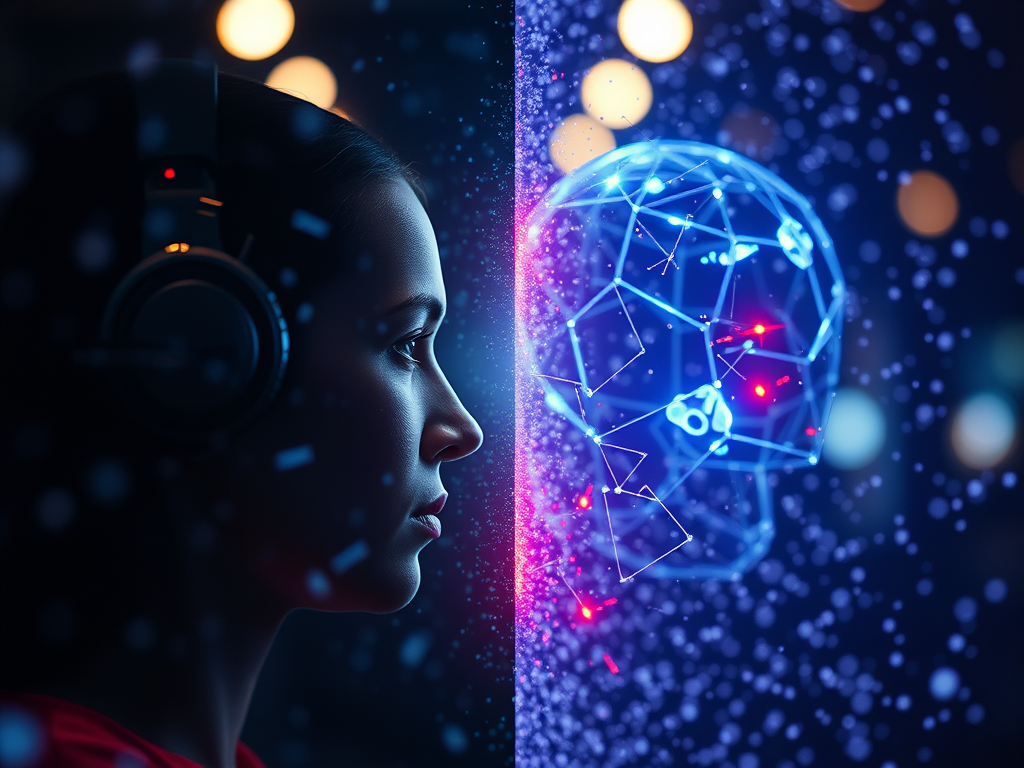


This essay delves into the potential drawbacks of AI-created art, highlighting the absence of human emotions and physical involvement. It also examines the potential physical and psychological harm caused by digitally produced art, pointing to the lack of muscular and vocal exercise. The writer suggests that engaging in traditional artistic practices may be beneficial for mental and physical health, particularly in processing trauma and stress. The post also emphasizes the immediate impact on our minds and bodies, encouraging scientific study on these hypotheses.
Some may think writing, graphic arts, and music produced by AI is or will eventually become perfect—something humans will never accomplish. However, this perfection comes at a cost. This type of art will be bereft of what makes human artistic creations beautiful in the first place—pain, anguish, suffering, character, love, joy.
AI art will be sterile of these characteristics. A simple definition of sterile is, that which cannot produce nor sustain life. Another way to look at AI art is by comparing it with artificial flavorings. While created to enhance or heighten flavor, sometimes making consumables more addictive, they wreak havoc on human health.
Even if AI audio and visuals can mimic that created by humans down to the invisible frequencies, the waves emanating from digital creations are sharply angular instead of smooth waves. Who’s to say these sharp waves being consumed by our eyes and ears aren’t causing microscopic cuts that, over time, could cause severe damage?
When I was a child, my father had a piece of a laser ruby. I asked him to explain to me how it worked and why lasers are used. He explained to me the laser ruby was a man-made ruby rod. He said the light electrons were shot through one end and bounced back and forth inside the ruby from one end to the other at a super fast rate of speed. Once the electrons got to a high enough speed, they would shoot out the end of the laser in a pinpoint thin beam of light. When I asked what the purpose of all that was, he said this pinpoint beam of light could be projected great distances without spreading out.
“Spreading out?” I asked.
He replied, “You know how when you shine a flashlight, the beam of light spreads out?”
“Yeah.”
“Well, the more a beam of light spreads out, the less far the beam of light will provide light.”
“Ok. Why does that matter?”
“Well, do you think, if you pointed a flashlight at the moon that the beam of light would make it to the moon?”
“No.”
“Well, a laser beam can. The beam will not only hit the moon super fast; but, by the time it gets there, the beam will only have gotten wider a tiny bit.”
“Why is it important for the beam to stay skinny?”
“Because, it makes pinpointing spots super accurate.
We all know laser beams are super accurate. They are so thin and accurate they can be used in precision cutting.
Light travels in waves. We’ve determined analog waves are smooth and digital, or artificially generated waves, are sharp. So, digitally generated art might actually be physically harmful.
What about psychologically harmful? I would venture to say yes on the grounds that digitally produced art uses less physical exertion on the part of the human. The muscles employed when engaging the motor skills necessary for drawing, painting, sculpture, playing musical instruments will not be exercised. And, we all know exercise is important for treating depression and keeping it at bay. The lung and muscle activity that is employed when singing is not used. And, the benefits to mental health with regards to singing might surprise you.
Aside from being similar to the deep breathing exercises of meditation and yoga, and we all know the benefits of engaging in these, singing uses the same muscles and produces the same chemicals in the body as crying. It has been said that crying is like a cleansing shower for the soul. And, most importantly, singing stimulates the Vagus Nerve which is responsible for the rest, digest, and repair system of the body.
Trauma can damage the functioning of the Vagus Nerve resulting in impaired signalling between the brain and the body, as well as impairment of the ability to get into REM sleep, during which the body repairs any damage to itself, and impairment of proper digestion. It has become known that the digestive system and the brain are linked in proper functioning of the body and for mental stability.
Therefore, stimulation of the Vagus Nerve can strengthen it’s functioning and help to process trauma stored in the body. For anyone who is unaware how chronic stress and complex trauma affect the body, I highly recommend two books: The Body Keeps the Score: Brain, Mind, and Body in the Healing of Trauma by Bessel A. van der Kolk, M.D., and Childhood Disrupted: How Your Biography Becomes Your Biology, and How You Can Heal by Donna Jackson Nakazawa.
The argument currently being made against AI arts is that there will be a loss to artists, in particular, and to our humanity as a whole. While this argument is valid, it really makes no immediate impact in the minds of people. They think this is an effect that may or may not occur sometime in the distant future. The point I am trying to make in this essay is that there may actually be a shorter-term, more immediate effect on our minds and bodies; and, no one seems to be looking at this aspect. So, I publish this as food for thought and, perhaps, to inspire scientific study on these hypotheses of mine.
To readers:
- What are your thoughts on AI-generated art?
- Is AI-generated art more or less appealing to you, personally, compared with art created by humans?
- Do you use AI in your writing, graphic art, or music?
- If so, what do you see as the benefits?
This author recommends a balancing of the use of and exposure to AI-generated and human created art with the following suggestions:
- Schedule time to visit art museums and attend live concerts.
- Join your church choir.
- Learn to play a musical instrument.
- Engage in art therapy or practice doodle art once per week.
- Learn a new form of artistic creation with a medium you’ve rarely or never used before to expand your ‘palette’ or portfolio.
Discover more from Celestia Quixs™
Subscribe to get the latest posts sent to your email.