
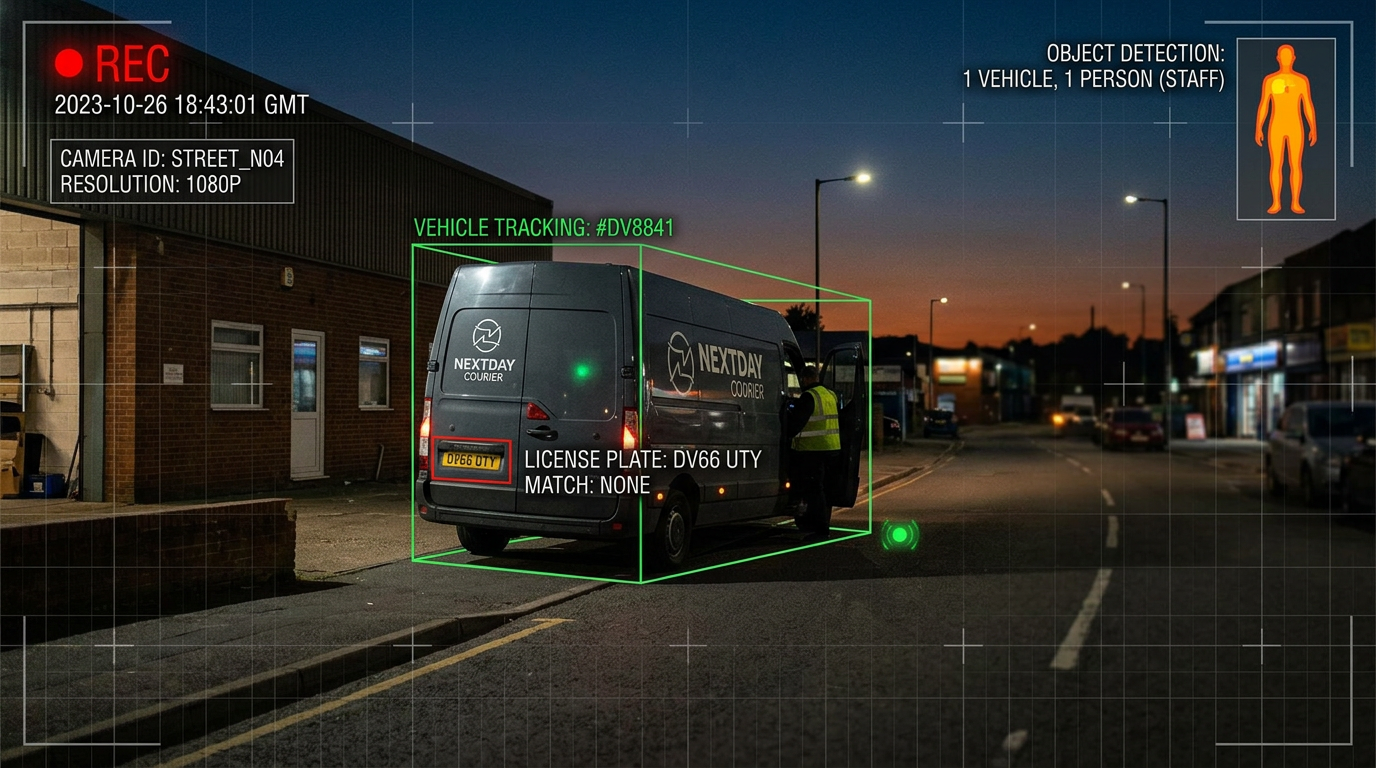


A Critique of Exploitation and Surveillance
Explore the dark side of Amazon’s DSP program, revealing brutal surveillance and exploitation of drivers caught in a corporate trap.
The author, a terminally ill individual with an unspent Amazon gift card, critiques Amazon’s Delivery Service Partner (DSP) program as exploitative, highlighting brutal surveillance and pressure on drivers. The system turns workers into data points for future automation, subjecting them to penalties for human needs, demonstrating a cycle of corporate cruelty and control.
- The DSP “small business” is a liability shield, not a boss. Amazon sells the $10,000 “be your own boss” dream, then wires the van with inward-facing AI cameras that penalize yawns, blinks, and bathroom stops — and outsources the firing to terrified DSP owners so the trillion-dollar entity at the top never signs the paperwork.
- Biology is coded as inefficiency, and the cruelty is fully outsourced. The routing AI doesn’t schedule bathroom breaks, the camera flags a yawn, the DSP owner signs the termination, and the entity at the top never answers for any of it. The machine punishes the body for having limits, and the org chart makes sure no human is ever accountable.
- The drivers are unpaid training data for their own replacement. The telemetry harvested from workers pissing in bottles is feeding the autonomous endgame already colliding in Las Vegas: Amazon’s Zoox robotaxis, Tesla’s 5,000-vehicle fleet application, and the Boring Company’s underground Loop.
By Celestia Quixs™ — HHSA Insider, Vested Professional, Terminally Ill Witness
The $70 I Will Not Spend
I have more than $70 sitting on an Amazon gift card that I will never spend. I am terminally ill. I live on a fixed income. Seventy dollars is real money in terms of my body, my budget, my survival math. And I will let it rot untouched — because spending it means subsidizing one of the most brutal labor-surveillance machines in the American economy: the Delivery Service Partner (DSP) program.
Amazon’s DSP Meat-Grinder, the Autonomous Endgame, and the Private-Sector Twin of Algorithmic Execution
1. The $10,000 Lure (The Illusion of Ownership)
Amazon recruits DSP owners with the promise that you can “start with as little as $10,000” and “be your own boss.” That number is the marketing lure. It is the dream of small-business ownership sold to people who want a way out of the wage grind.
Here is what you actually buy: vans wrapped to Amazon’s specifications, a contract written by Amazon, routes set by Amazon, rates set by Amazon, and performance metrics defined by Amazon. The DSP owner is not a boss. The owner is a liability shield — a layer of ‘independent’ bureaucracy that absorbs the legal risk of the operation while the trillion-dollar entity at the top holds every single lever. This structural vertical dominance and downloading of corporate risk onto subcontractors was thoroughly documented by the Open Markets Institute in its formal monopoly filings to the Federal Trade Commission.
2. The Wired Van (The AI That Counts Yawns)
The vans are wired, and they monitor the drivers relentlessly. Investigative reports by Reuters and CNBC established that Amazon began a massive nationwide rollout of AI-powered camera systems—developed by transportation tech startup Netradyne—inside its delivery fleet in early 2021. These systems carry inward-facing lenses pointed directly at the driver alongside outward-facing road cameras.
The AI does not just record. As documented by an intensive VICE Motherboard investigation, it analyzes the driver’s body in real time:
- Eye movement and blink rate: To detect “fatigue” or “distraction.” Look down for three seconds and the AI flags you.
- Head position: Turn to check a side mirror for too long to ensure a safe lane change, and the system dings you for distraction because your face is turned away from the front.
- Yawning: The software monitors facial muscles to determine whether you are tired, directly impacting safe-driving metrics.
- Seatbelt and phone-shaped motion: Any movement resembling holding a device or driving unbuckled triggers an automatic violation.
Each flag becomes an automated “safety event” on a dashboard accessible by both Amazon and the contracting company. Drivers have faced direct weekly discipline and loss of necessary income due to these highly sensitive, often erroneous automated alerts.
3. The Mentor App (The Leash in the Pocket)
On top of the van’s cameras, drivers are required to run telematics apps — the “Mentor” driver-safety app built by eDriving is a core requirement of the DSP ecosystem.
Combined with the van’s GPS telemetry, Amazon tracks how many seconds the vehicle idled, how fast it took a corner, and whether it deviated from the AI-optimized route by a single block. The aggregate of all this data becomes the driver’s safe-driving score. And the driver’s score dictates the DSP owner’s collective score. Which brings us to the cruelest gear in the machine.
4. The Terrified Middle Manager
Amazon grades each DSP on a strict weekly scorecard, where safety and compliance metrics account for a massive 40 percent of the total business score. If a DSP’s aggregate score drops below “Fantastic,” Amazon strips away the critical volume bonuses needed to pay for vehicle repairs, insurance, damages, and support staff. If scores stay low, Amazon terminates the entire corporate contract.
So what does the “independent small-business owner” do? They become a terrified middle manager for an algorithm. Internal company communications reveal DSP owners warning teams that a single unbuckled seatbelt alert or Netradyne infraction instantly wipes out thousands of dollars in revenue, forcing them to automatically strip driver incentives and write up or fire workers just to prevent their own businesses from going bankrupt. The trillion-dollar entity at the top never signs the termination paper. The cruelty is outsourced downward, one layer at a time, so that no human being with a name ever has to answer for it.
5. The Bathroom Break Reality (Biology as “Inefficiency”)
This is where the biological erasure happens. The routing algorithm calculates the exact mathematical time it takes to drive from Stop A to Stop B and walk a package to a door. It does not code in “driver has a human bladder.” If a driver pulls over to urinate, the van’s GPS registers “vehicle stopped off-route.” The AI flags it as an inefficiency, the DSP takes a penalty, and the driver gets written up.
The system’s answer to a biological need is a penalty — so drivers do what the system leaves them no choice but to do: they urinate in bottles while rolling inside a panopticon.
Do not take my word for it. Take theirs:
In early 2021, Amazon’s official corporate account publicly denied that its drivers pee in bottles. Days later, VICE Motherboard published Amazon’s own internal logistics emails explicitly noting that drivers were urinating in bags and bottles, forcing Amazon to issue a formal public apology for its denial. Concurrently, a widespread worker survey conducted by the GMB labor union confirmed that a stark majority of delivery drivers are regularly forced to urinate in plastic bottles due to impossible routing quotas that eliminate bathroom stops.
6. The Box Pays the Price (Downstream Rebellion)
When a worker is monitored by an AI camera, denied a bathroom break, and threatened with termination for being thirty seconds behind an impossible schedule, they lose all agency over their own body. The only agency they have left is over the box in their hands.
Tossed packages, puddle drops, trash-can deliveries are not “bad customer service.” They are the only microscopic act of rebellion left to a completely disenfranchised worker inside a rolling panopticon. The package becomes the proxy for the rage against the machine.
And the drivers know exactly how to make the trillion-dollar monolith bleed: mishandling a delivery is a surefire way to force Amazon to “face the heat.” It triggers irate customer service calls that cost the corporation in refunds and compensatory ‘inconvenience tax’ gift cards just to placate the customer.
My own family weaponized this exact logistics network against me, using Amazon’s anonymous gifting to send a barrage of harassing gag gifts to my door—a tactic verified by Amazon’s own Executive Escalations team. And my own orders? They have arrived trashed, damaged, or destroyed more than once.
This does not represent random, isolated incidents spread across a year. These were consecutive orders destroyed over a span of a couple of months. The driver did not know the psychological “poison” inside the anonymous box. He only knew that the algorithm was torturing him, and the box was the only thing he could punish to hurt the company.
So why would I ever want to order more from Amazon? A $10 “inconvenience” gift card and a refund to my payment method fixes nothing when the physical goods are still destroyed, the time is lost, and the harassment continues unabated. The system just keeps feeding the driver to the woodchipper, and the driver keeps taking it out on the box. That is exactly why my $70+ gift card balance will sit there and rot.
7. The King of the Hill (Training the Replacement)
The invasive surveillance, the biometric penalties, the routing algorithms that ignore human biology—this isn’t just a labor dispute. It is a massive, multi-billion-dollar data-harvesting operation. Amazon is using its human DSP army to map routes, refine operational metadata, and train the automated systems that will eventually replace them.
To understand the endgame, you only have to look at the “King of the Hill” battle playing out right now in my own backyard: Las Vegas.
This is the physical staging ground for the corporate collision between Jeff Bezos and Elon Musk. On August 10, 2026, Amazon-owned Zoox officially launched its first paid commercial robotaxi rides in Las Vegas, deploying purpose-built autonomous vehicles completely stripped of steering wheels and pedals. Meanwhile, Tesla is aggressively retaliating, having applied for a permit with the Nevada Transportation Authority to drop a 5,000-car robotaxi fleet into Clark County.
But the most devastating piece of infrastructure is already built beneath the city: The Boring Company’s Vegas Loop.
These single-lane underground tunnels aren’t just a novelty tourist shuttle; they are a sterile, controlled testing ground for transitioning Full Self-Driving (FSD) into true, driverless operations. By moving autonomous pods underground, Musk bypasses the chaotic surface gridlock entirely. The endgame is a subterranean logistical monopoly.
While Amazon is currently forcing human DSP drivers to navigate surface traffic—micromanaging their bladders with Netradyne cameras—Tesla is building an underground freight and transit network that will render human-driven regional distribution obsolete. The human drivers aren’t just being exploited for today’s delivery margins. They are the unpaid, biological training data for the machines that will take their jobs.
To borrow the type of framing popularized by John Oliver regarding the absurdity of state surveillance:
Amazon is using AI to record you pissing in a bottle because having a human bladder can get you fired. And the ultimate punchline? The telemetry from that humiliation is being fed directly into the algorithm that drives the robot taking your route.
8. The Symmetry (The Private-Sector Twin of the Algorithmic Execution)
In my essay The HIE Blacklist and SSA AI: Inside the Closed-Loop Safety Net Trap, I mapped how the state’s automated systems is designed to read my sparse medical billing data — sparse because a corporate medical blacklist locked me out of care — as “medical improvement,” and terminate my income on the strength of that silence.
The same architecture exists in the private sector, wearing a delivery uniform:
The state’s AI looks at the absence of medical billing codes and decides you aren’t sick enough to survive.
Amazon’s AI looks at a driver’s need to urinate and decides it is an “inefficiency” that costs him his livelihood.
Both systems reduce a fragile human body to a disposable data point. Both systems punish the body for having biological limits. And both systems hide behind a layer of “independent” bureaucracy — SSA auditors on one side, DSP owners on the other — so the entity at the top never has to take responsibility for the cruelty.
And the same people who tell an abuse survivor to “just leave” tell the delivery driver to “just find another job.” Both treat a structural trap as a personal choice. Both are erasure dressed up as advice. (See: Why “Just Leave” Is a Can’t, Not a Won’t.)
9. The Bottom Line (Let It Rot)
My $70 is not a rounding error. It is real money, and that is exactly why it matters. I will not give another cent to fund the cameras that count yawns, the routing software that ignores bladders, the liability shields, or the executive bonuses paid out of both.
When someone tells you to “just boycott,” they assume your money has somewhere else to go. Mine doesn’t. I am choosing which cage starves. The gift card rots. The machine does not get fed.
Sources:
- Amazon.com — Delivery Service Partner (DSP) Recruitment Portal. Publicly documented startup cost projections ($10,000 baseline entry fees) and promotional metrics.
- Hanley, D., & Hubbard, S. (2020) — Eyes Everywhere: Amazon’s Surveillance Infrastructure and Revitalizing Worker Power. Open Markets Institute report detailing vertical control levers, algorithmic routing software, and independent contractor delivery structures as physical liability insulation layers.
- Reuters (Feb 4, 2021) — Amazon Plans AI-Powered Cameras in Delivery Vans to Improve Safety. Investigative technology dispatch covering the official corporate deployment of Netradyne telematics systems across the contractor fleet network.
- CNBC (Feb 3, 2021) — Amazon Using AI-Equipped Cameras in Delivery Vans. Structural breakdowns of real-time algorithmic driver tracking mechanics.
- VICE Motherboard (Sept 20, 2021) — Amazon’s AI Cameras Are Punishing Drivers for Mistakes They Didn’t Make. Definitive investigation documenting false safety violations, automated verbal metric pacing, mirror-check distraction penalties, weekly DSP tier scorecards, and internal documentation showing compliance metrics dictating 40% of small-business operational survival.
- VICE Motherboard / The Verge (April 2021) — Amazon’s Bizarre ‘Apology’ for Pee Scandal Just Makes It Worse. Investigative tracking of internal Amazon distribution emails detailing delivery associate container urination, ending in Amazon’s formal public corporate apology and retraction of their previous public denial.
- GMB Union (2018) — Amazon firms face legal action. Logistical worker whistleblower claims and driver lawsuits detailing unrealistic parcel quotas, excessive working hours, and couriers forced to drive while dangerously fatigued to prevent termination.
- GovTech (August 10, 2026) — Amazon-Owned Autonomous Taxis to Launch Service in Las Vegas. Regional transit updates recording the August 10, 2026 commercial rollout of pedal-less Zoox autonomous fleets in Las Vegas.
- 8NewsNow Las Vegas (June 8, 2026) — Tesla looking to bring possible 5K robotaxi fleet to Las Vegas area. Regional automotive and transit reporting tracking Tesla Robotaxi LLC’s application with Nevada regulators to launch a massive fleet of up to 5,000 autonomous vehicles throughout Clark County.
Discover more from Celestia Quixs™
Subscribe to get the latest posts sent to your email.